1928 — 1999 · A Vision Unmatched
STANLEY
KUBRICK
Cinema's most meticulous architect of the impossible
Scroll
1928 — 1999 · A Vision Unmatched
Cinema's most meticulous architect of the impossible
Video

A documentary portrait of one of cinema's most meticulous and visionary directors — exploring the genius behind thirteen extraordinary films spanning four decades.
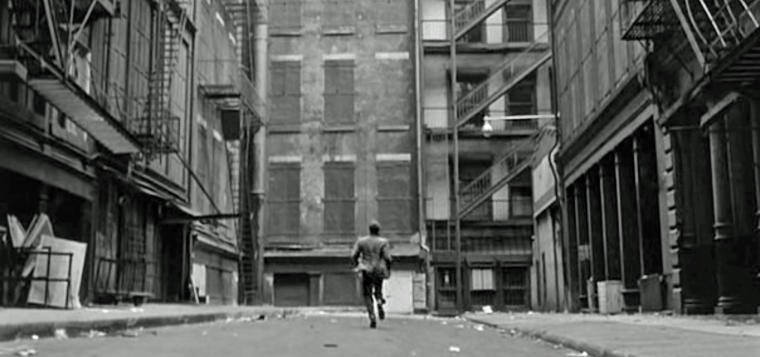
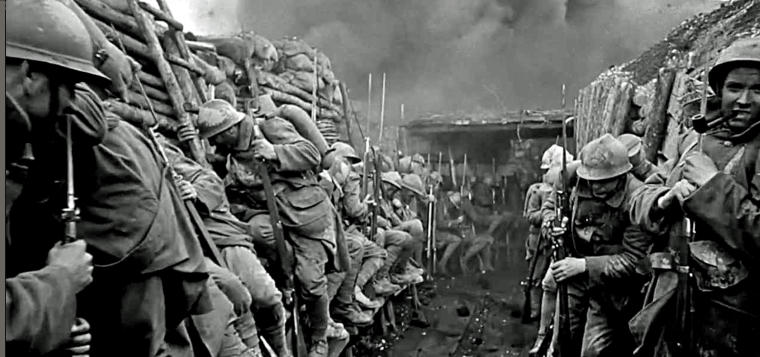
From the gritty streets of New York to the trenches of World War I, from the corridors of a haunted hotel to the void of deep space — Kubrick's films are united by an uncompromising vision and a refusal to accept the ordinary.
Complete Filmography
The Director
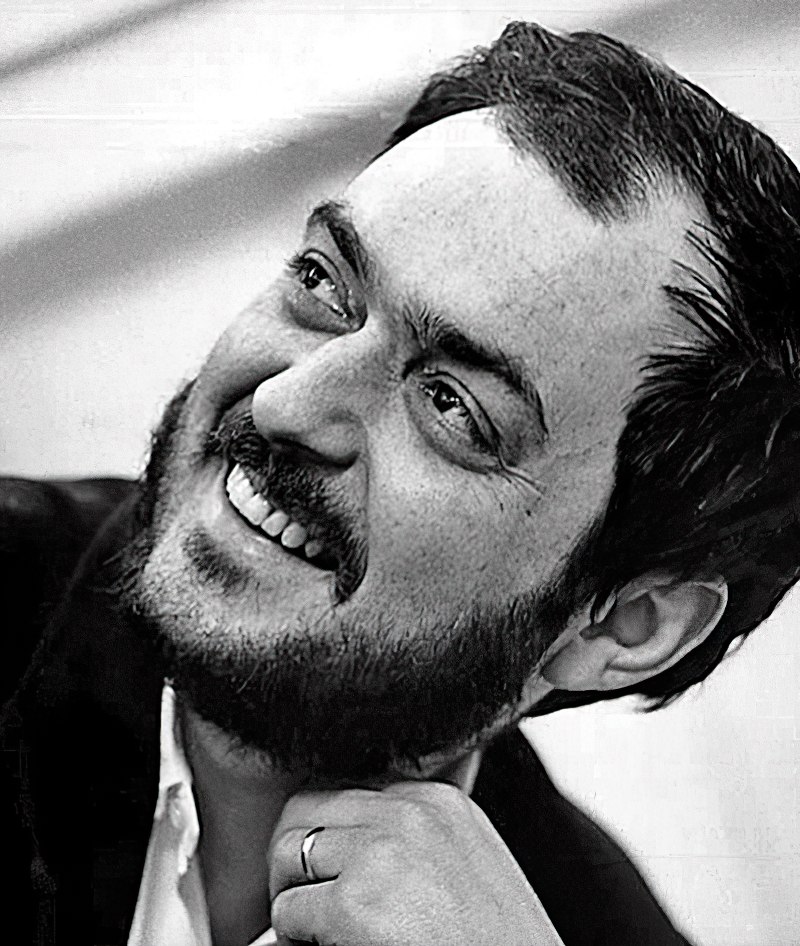
Born in New York City on July 26, 1928, Kubrick began his career as a photographer before transitioning to film. His meticulous approach, spanning over four decades, produced some of the most revered works in cinema history.
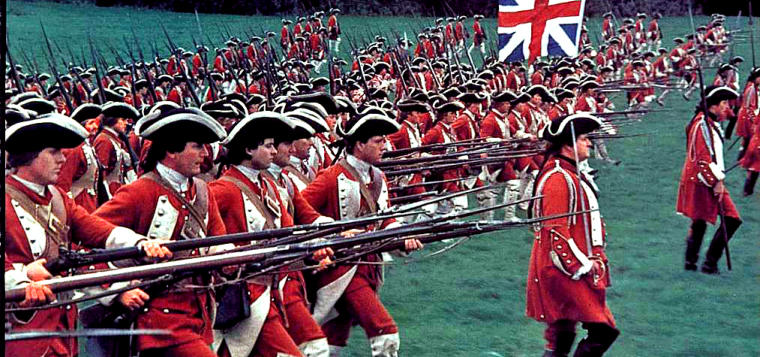
His films are defined by intense attention to detail, innovative cinematography, extensive set design, and a dark, unsentimental humour. Kubrick would go to extraordinary lengths to achieve a specific visual or emotional effect — famously shooting Barry Lyndon with modified NASA lenses to capture candlelight.
"A filmmaker has almost the same freedom as a novelist has when he buys himself some paper."— Stanley Kubrick
He died on March 7, 1999 at his home in Hertfordshire, England, just six days after delivering his final cut of Eyes Wide Shut. He was posthumously awarded a BAFTA Fellowship in 2000.
Kubrick was notoriously reclusive in his later years, rarely granting interviews and working almost exclusively from his Childwickbury Manor estate north of London. Yet his influence over the filmmakers who followed him is immeasurable — from Steven Spielberg and Martin Scorsese to Christopher Nolan, countless directors cite his uncompromising standards and technical innovations as a defining inspiration.
What set Kubrick apart was not merely craft but intellectual restlessness. He approached each new film as if entering a completely foreign discipline — devouring books, consulting experts, and refusing to repeat himself. No two Kubrick films feel alike in genre, tone, or visual language, yet each is unmistakably his own.
"This man, in spite of the widespread reputation he had for mastering his means of expression, was misunderstood and misinterpreted every time he made a film. I've often asked myself why. In fact, only once did he have unanimously positive reviews, and they were for Paths of Glory. I've never understood how people who are so attached to film never realized that he was number one."— Jack Nicholson
Career Milestones
A short documentary debut, capturing boxer Walter Cartier — Kubrick's entry into filmmaking from his career as a Look magazine photographer.
His first masterwork — a searing anti-war picture starring Kirk Douglas, banned in France for 18 years for its portrayal of the French military.
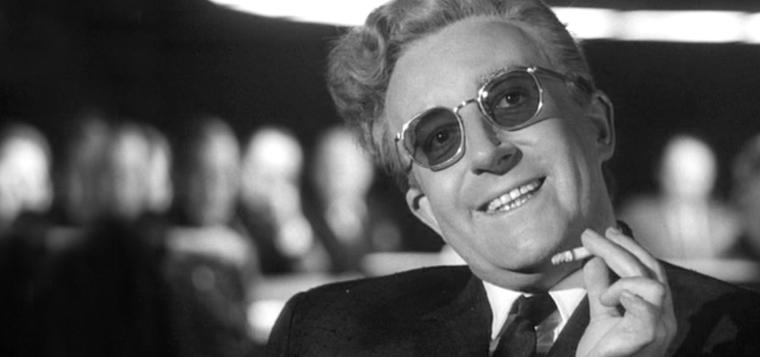
Still regarded as the finest political satire in cinema, Peter Sellers' triple-role performance anchors this Cold War black comedy. BAFTA Best Film winner.
Kubrick's only personal Academy Award — for special effects. Widely regarded as the greatest science fiction film ever made and one of cinema's most influential works.
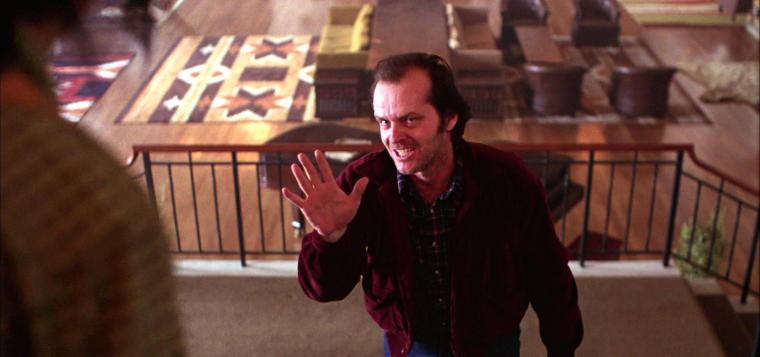
Initially met with mixed reviews and a Razzie nomination, The Shining is now universally regarded as one of the greatest horror films ever made.
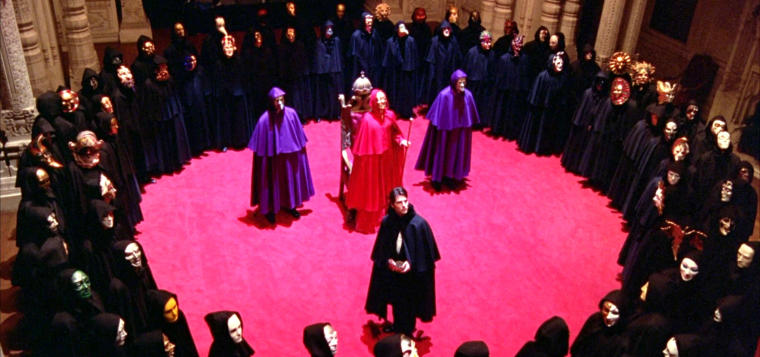
His final film, released posthumously. Kubrick delivered the final cut six days before his death on March 7, 1999. A BAFTA Fellowship was awarded in his honour in 2000.
Background
Kubrick's family and many critics felt that his Jewish ancestry may have contributed to his worldview and aspects of his films. After his death, both his daughter and wife stated that although he was not religious, "he did not deny his Jewishness, not at all." His daughter noted that he wanted to make a film about the Holocaust, to have been called Aryan Papers, having spent years researching the subject. Most of his friends and early photography and film collaborators were Jewish, and his first two marriages were to daughters of recent Jewish immigrants from Europe. British screenwriter Frederic Raphael, who worked closely with Kubrick in his final years, believes that the originality of Kubrick's films was partly because he "had a (Jewish?) respect for scholars." He said that it was "absurd to try to understand Stanley Kubrick without reckoning on Jewishness as a fundamental aspect of his mentality."
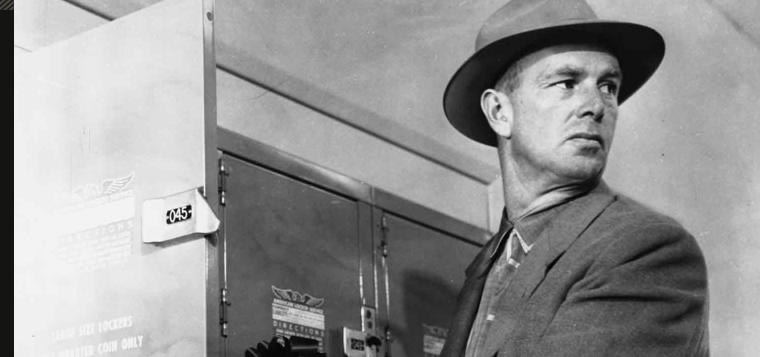
Walker notes that Kubrick was influenced by the tracking and "fluid camera" styles of director Max Ophüls, and used them in many of his films, including Paths of Glory and 2001: A Space Odyssey. Kubrick noted how in Ophüls' films "the camera went through every wall and every floor." He once named Ophüls' Le Plaisir as his favorite film. According to film historian John Wakeman, Ophüls himself learned the technique from director Anatole Litvak in the 1930s, whose work was "replete with the camera trackings, pans and swoops which later became the trademark of Max Ophüls." Film critic Robert Kolker sees the influence of Welles' moving camera shots on Kubrick's style. LoBrutto notes that Kubrick identified with Welles and influenced the making of The Killing, with its "multiple points of view, extreme angles, and deep focus."
Kubrick adapted all but his first two full-length films from existing novels or short stories. Many of the subjects Kubrick used for his films came to him unintentionally and indirectly, from books, newspapers, and talking with friends about various topics. Once he found a subject that interested him, however, "he devoured all relevant material" he could find about the topic. He occasionally collaborated with writers established outside the film world — often novelists or reporters — for several of his screenplays: Terry Southern for Dr. Strangelove, Arthur C. Clarke for 2001, and Diane Johnson for The Shining. Geoffrey Cocks believes that Kubrick was also influenced by Ophüls' stories of thwarted love and a preoccupation with predatory men, while Herr notes that Kubrick was deeply inspired by G. W. Pabst, who earlier tried but was unable to adapt Schnitzler's Traumnovelle, the basis of Eyes Wide Shut.
As a young man, Kubrick was fascinated by the films of Soviet filmmakers such as Eisenstein and Pudovkin. Kubrick read Pudovkin's seminal theoretical work, Film Technique, which argues that editing makes film a unique art form that needs to be employed to manipulate the medium to its fullest. Kubrick recommended this work to others for years to come. Thomas Nelson describes this book as "the greatest influence of any single written work on the evolution of [Kubrick's] private aesthetics." Kubrick also found the ideas of Constantin Stanislavski essential to understanding the basics of directing, and gave himself a crash course in his methods. He explained: "The equivalent to Pudovkin's book on film editing is a book oddly enough about Stanislavsky, not by him: Stanislavsky Directs, by Nikolai M. Gorchakov. I would regard it as an essential book for any intending film director." Kubrick also cited David Lynch's Eraserhead (1977) as one of his favorite films and used it as a creative reference during the directing of The Shining.
Bibliography
Text on this site is used under a Creative Commons license. The following sources were consulted in the preparation of this website.